https://www.thetimes.com/world/middle-east/article/trump-iran-peace-plan-reject-kgnwrflt3
FULL REPORT
Trump threatens to ‘unleash hell’ as Iran rejects peace plan
US president flies into a rage as his demands for an end to Iran’s uranium enrichment programme and a guarantee to keep the Strait of Hormuz open are rejected
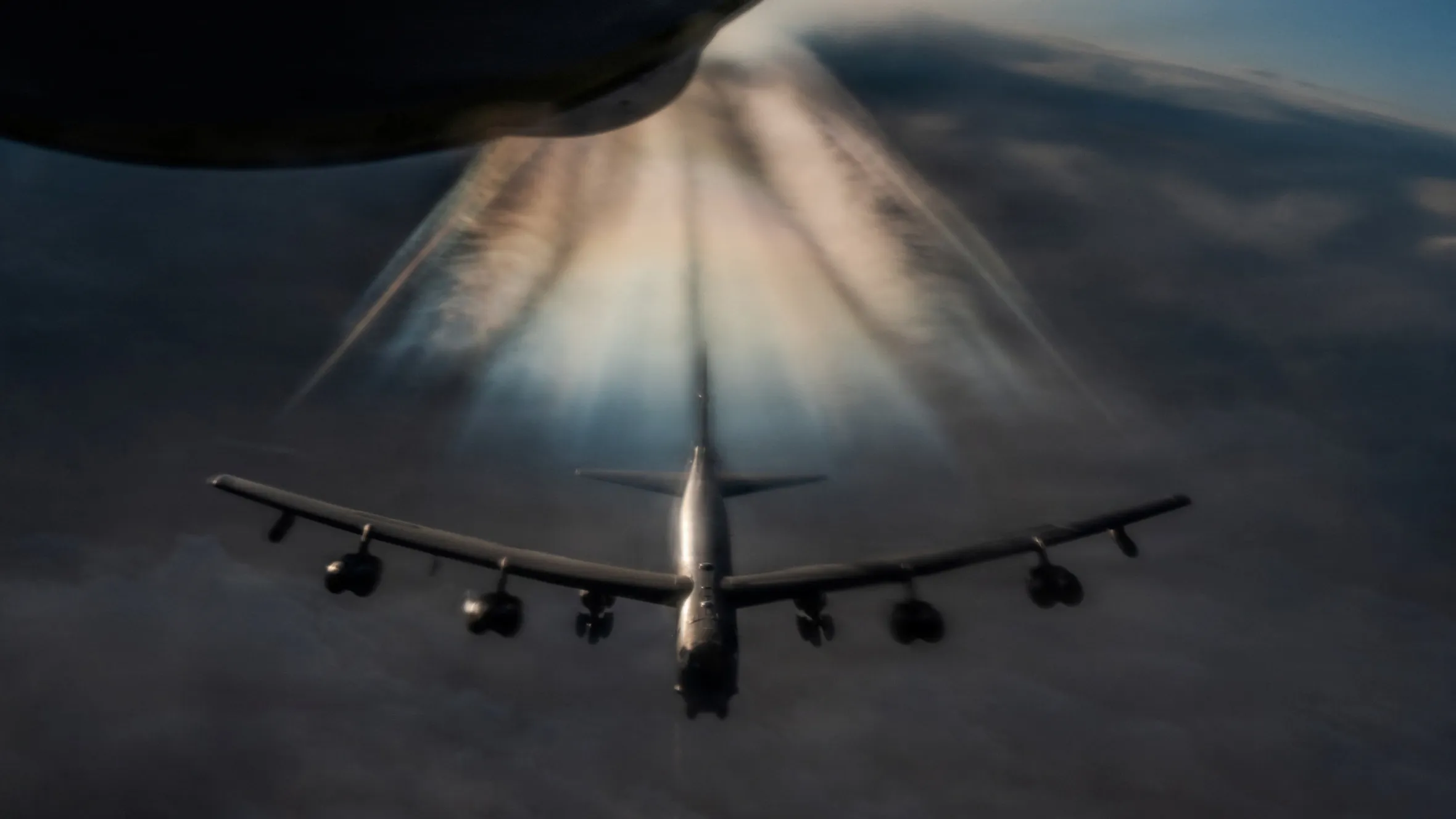
A US Air Force B-52H Stratofortress bomber is refuelled during Operation Epic Fury US AIR FORCE/REUTERS
Samer Al-Atrush, Middle East Correspondent, George Grylls, Washington, and Richard Spencer, Amman
Wednesday March 25 2026, 10.30pm, The Times
President Trump threatened to “unleash hell” on Iran after the regime said it would reject a 15-point plan to end the war.
Trump’s press secretary, Karoline Leavitt, said that Iran had “miscalculated” by refusing to accept defeat in the war being waged on the country by the United States and Israel.
“If Iran fails to accept the reality of the current moment, if they fail to understand that they have been defeated militarily and will continue to be, President Trump will ensure they are hit harder than they have ever been hit before,” she said.
“President Trump does not bluff and he is prepared to unleash hell. Iran should not miscalculate again.”
Iran’s rejection of Trump’s demands was accompanied by threats of its own. It warned the US against trying to land troops on Kharg Island, the functional heart of its oil industry.
“Do not test our resolve to defend our land,” said Mohammad Bagher Ghalibaf, the parliamentary Speaker and the man seen in Washington as the regime’s most likely lead negotiator in any “peace process”.
The warnings from both sides came as a former vice-president of BP claimed that Britain could be hit by oil and gas shortages within three weeks.
Nick Butler, a professor at Kings College London, told Times Radio: “There is a crisis coming. I think within the next two to three weeks you will see physical shortages. That’s been confirmed I think this week by Shell. I think the government now should be seriously planning how they’re going to handle that.” Butler urged the government to refocus on developing North Sea reserves.
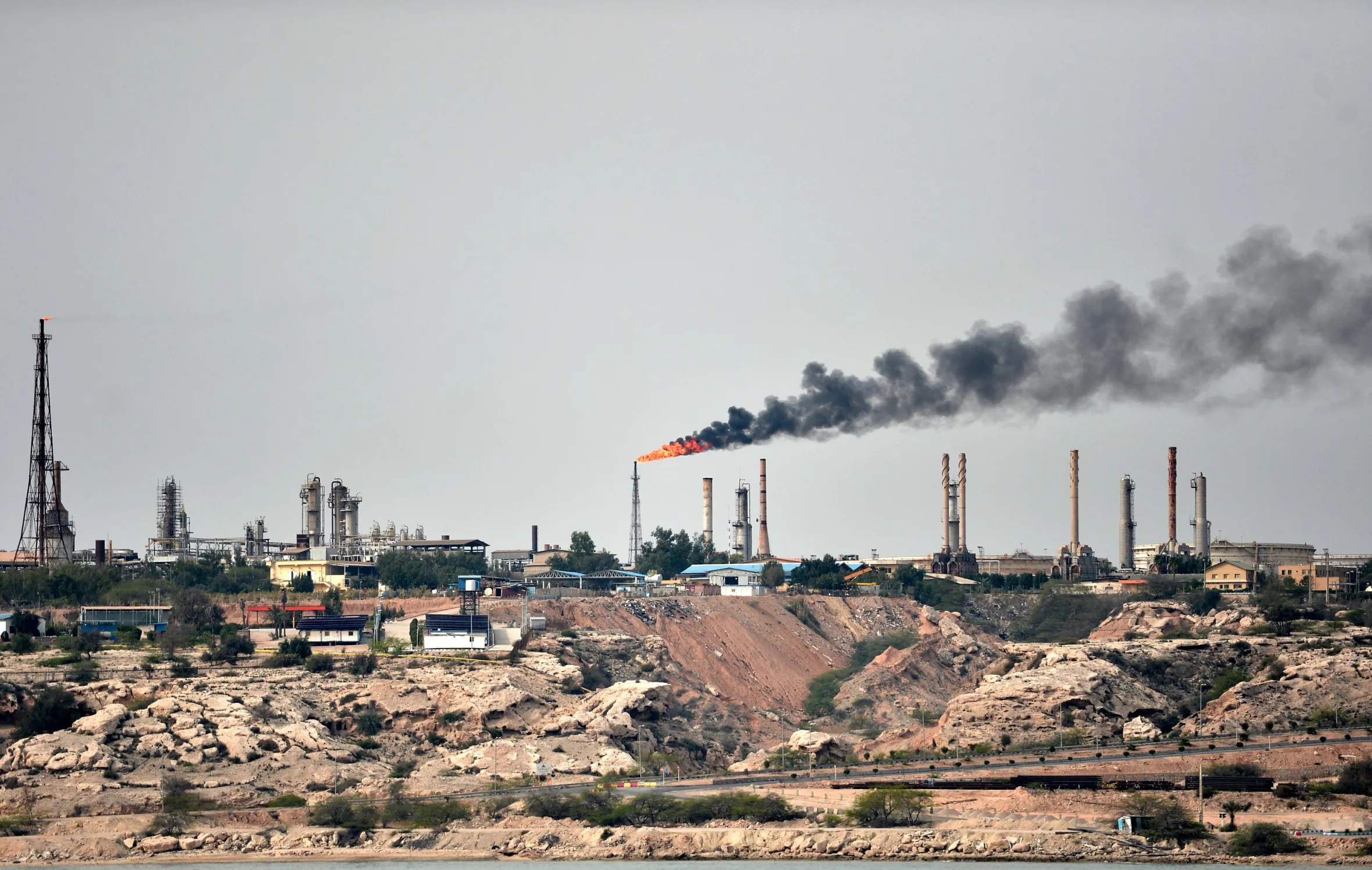
The Port of Kharg Island oil terminalFATEMEH BAHRAMI/ANADOLU/GETTY IMAGES
The White House’s 15-point plan was delivered to Tehran by the two sides’ latest intermediary, the Pakistani government, and was confirmed as having been received.
Its most prominent demand was a total end to Iran’s uranium enrichment programme, and the closure of the three main sites associated with it, at Natanz, Fordow and Isfahan.
Others included ending the threat to Israel posed by Iran’s international network of proxy militias, limiting its ballistic missile programme, and guaranteeing to keep the Strait of Hormuz open. In return, Iran would receive sanctions relief, and the US would help the country to build a civilian nuclear energy programme.
All the main demands have been rejected outright in the past by Iran, and they go well beyond what the US was asking for during the talks that were interrupted by the start of the bombing campaign.
Iranian state television said that the regime would fight on. “Iran has responded negatively to an American proposal aimed at ending the ongoing imposed war,” a statement read. “The end of the war will occur when Iran decides it should end, not when Trump envisions its conclusion.”
Tehran also outlined its own demands, including an end to attacks on its proxy militias — notably Hezbollah in Lebanon — and reparations for the losses it had suffered.
The Pentagon is sending at least two marine expeditionary forces as well as thousands of paratroopers to join ground troops in the region.
Ghalibaf said he had “intelligence” that the US was planning to attack an Iranian island in the Gulf — presumed to mean Kharg — along with a “regional country”, most likely a reference to the United Arab Emirates, the most bullish Arab state.
“All enemy movements are under the surveillance of our armed forces,” he wrote on X.
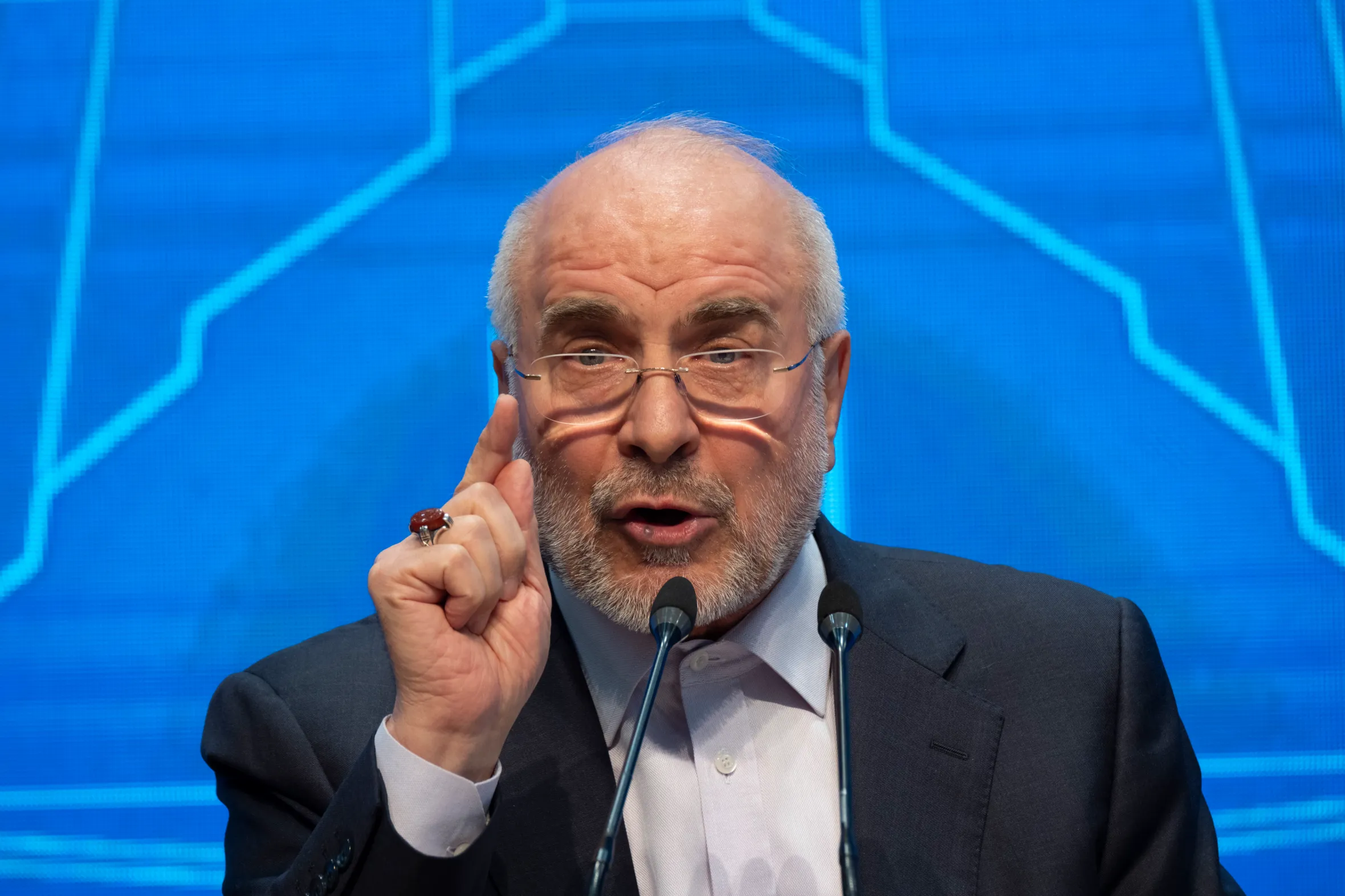
Mohammad Bagher GhalibafMORTEZA NIKOUBAZL/NURPHOTO/GETTY IMAGES
The Iranians also threatened to cause further chaos for global trade by targeting the Bab al-Mandab, the strait at the entrance to the Red Sea. When the Houthis began attacking vessels in that strait in response to Israel’s war on Gaza they forced the diversion of large quantities of shipping away from the Suez Canal, one end of which is at the far end of the Red Sea.
Although Trump said he was continuing to hold off his threat to “obliterate” Iranian power stations, the heightened rhetoric on both sides will disappoint those who thought the fresh overtures towards talks this week were signs of an “off-ramp”.
“Both the United States and Iran … are unlikely to back down from their respective maximalist demands for war termination at the moment,” Farzan Sabet, an Iran analyst at the Geneva Graduate Institute, said. “They are far from reaching their goals, while retaining capacity to escalate further.”
Danny Citrinowicz, a former Israeli military intelligence officer who is now an analyst with the Atlantic Council, said: “Trump is facing two options. One is escalating through an invasion. The implication will be harsh. Or he can reach an agreement by actually surrendering to the Iranian demands, stop the war, have a ceasefire, and leave. I think each option is problematic on its own.”
Leavitt claimed that Trump’s tactics were working, however. “You are beginning to see the regime look for an exit ramp,” she said. “They recognise they are being crushed. Their ability to attack American and allied forces as well as their ability to defend their own territory is dwindling literally hour by hour.”